TUESDAY, DECEMBER 10TH
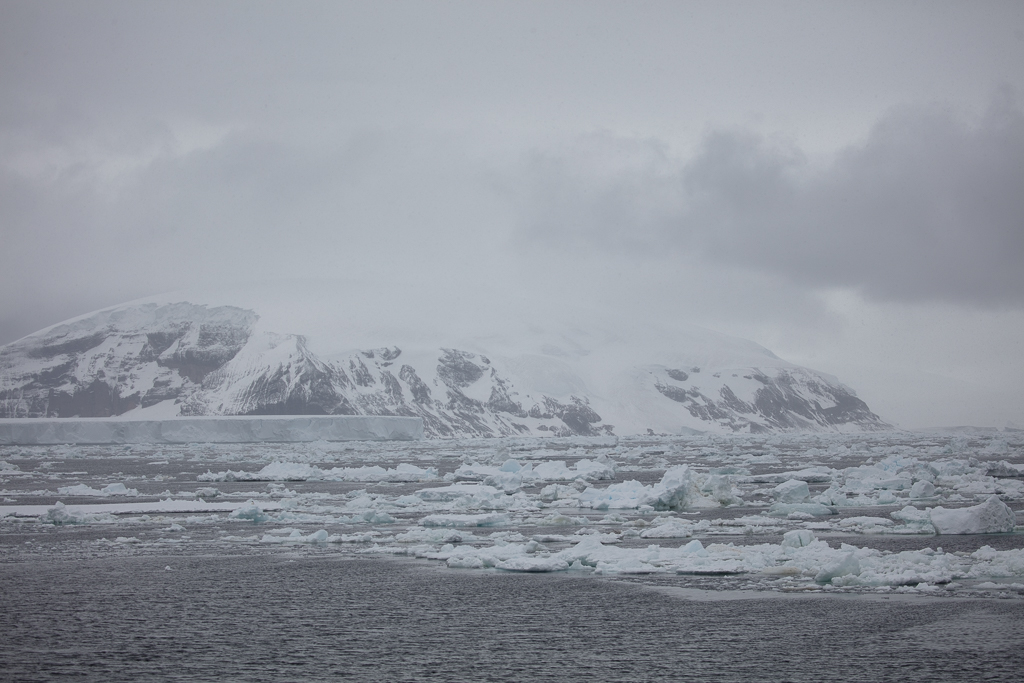
This morning the first stop of the day is at a collapsed volcano that harbors a bay that was once used for Whaling until the late 60's. We were told that we should try to get up and be outside around 7:00am to watch as the captain maneuvers the ship into the bay. We'd heard that the entrance into the bay can be a hairy experience and I think most everyone wanted to watch and see what the fuss was all about. The ship needs to pass through a 1300 ft wide gap in the wall of a Caldera known as "Neptune's Bellows" because of the violent winds that sometimes blow across the mouth of the entrance. Those winds have pushed ships up onto the rocks more than a few times from what I understand, so I decided this would be a great time to set up my GoPro to shoot another time-lapse and capture what it looked like putting the ship into the mouth of a collapsed volcano. It was a pretty morning out there but the winds were kicking up a bit and if you watch the video, you'll be able to see how much the ship rocked back and forth on the way toward the caldera. It wasn't as exciting to watch as I expected it to be, but was very interesting to feel the ship really being blown around until we entered the mouth of the caldera, where the winds and waves really seemed to calm down ... until we moved a little deeper into the opening and then we were hit with very high and super cold blasts of wind as the winds rushed up and over the wall and glacier slamming into the ship. This seemed to be an "easy" sail into the bay, but did make you realize how the area got it's name and made you wonder what that had to be like back in the day without all the sophisticated navigation today's ships have, or even more, if there was a storm brewing while a captain tried to navigate his way in there.
The wind was really whipping and cold and I think most everyone including me headed back inside. Breakfast was going to be served before we climbed onto the Zodiacs to head to shore, and since I wasn't hungry I just spent the time getting bundled up and looking out the windows to see what I could see. I was actually kind of excited to see something other than penguins to shoot today. I already saw a number of things to shoot that would be perfect for some abstract type photography this morning. That's much more in my wheelhouse than wildlife has proven to be for sure! LOL
Wandering around through much of the old Whaler's equipment really made you think about what used to go on here, and to think about how many whales much have been fished here. It was sad to think about, especially after seeing so many of those great animals out in the waters around Antarctica and knowing there would probably have been so many more to see if not for the massive hunting of them over the years. Even with all that in mind I really enjoyed shooting abstracts of the old machinery that was scattered around the bay and even found what looked like a tractor of some kind buried deep in the sands near the beach.
There were constant reminders that this is a volcano and that there is still activity somewhere deep below us. The smell of sulfur was pretty strong in the air and then all along the beach, there was a constant flow of steam coming up out of the sands. I walked down to the water's edge and twisted my boots back and forth until they were buried in the sand and after a few minutes you could actually feel the warmth work it's way through the thick rubber and warm your feet. It was a very cool experience to feel how warm your feet got even though you were surrounded by all that ice cold water.
Speaking of ice cold water, there were a handful of people that decided they really wanted to do a polar plunge here before heading back to the ship. I couldn't decide if they were brave or crazy LOL I didn't stick around to watch as they were all going to be put on the last Zodiac back to the ship, but did later watch the video of all the craziness and was happy I decided against joining in! LOL My cabin mate and one of the guys I'd been hanging out with for most of the trip did take the plunge and both said that the water was crazy cold! They did really seem to be happy they did it though. I mean how many people can say that took a quick swim in Antarctic waters right?
Showing posts with label Icebergs. Show all posts
Saturday, December 28, 2019
Friday, December 27, 2019
Antarctica - Day 12 - Part 1
MONDAY, DECEMBER 9TH
Breakfast was served at 07:30 again this morning, and once again I decided to skip it because I still can't adjust to eating when my body think's it's 2:30am. LOL
Our first landing today was at 9:00am at a location called Brown Bluff. When you see the photo, the name will make perfect sense. :) Brown Bluff is an ice-capped, flat topped, 745m high mountain with a prominent cliff of reddish-brown volcanic rocks. It is part of the northernmost continental extension of the Antarctic Peninsula, and home to thousands of Adelie Penguins, a few hundred Gentoo Penguins and a mix of Kelp Gulls, Skuas, Snow Petrels, and Pintado Petrels. It is located by the Antarctic Sound to the east of Hope Bay.
The ice had seriously moved in on us, and the last thing we wanted was to get stuck here in all that ice for who knows how long if it froze up all around the ship.
LAT. 63° 32’ 00” S, LONG. 56° 52’ 00” W
Weather Conditions
Wind (direction & force): South | Fresh Breeze (17-21 Knots)
Weather & Sea: Clouded | Smooth
Temperature: -2ºC | 28.4 ºF
Breakfast was served at 07:30 again this morning, and once again I decided to skip it because I still can't adjust to eating when my body think's it's 2:30am. LOL
Our first landing today was at 9:00am at a location called Brown Bluff. When you see the photo, the name will make perfect sense. :) Brown Bluff is an ice-capped, flat topped, 745m high mountain with a prominent cliff of reddish-brown volcanic rocks. It is part of the northernmost continental extension of the Antarctic Peninsula, and home to thousands of Adelie Penguins, a few hundred Gentoo Penguins and a mix of Kelp Gulls, Skuas, Snow Petrels, and Pintado Petrels. It is located by the Antarctic Sound to the east of Hope Bay.
Today was the first day where the weather finally looked and felt like what I had always Antarctica to be like. The sky was grey, the wind was blowing pretty hard, and it was cold out there. In fact, before we headed to the land, we were told that our stay may have to be short because the ice was already beginning to move back in. The captain said he would stay as long as he could, but if the conditions got much worse, he would blow the ships horn twice and we all needed to get back to the ship ASAP.
As we headed to land, things didn't look too bad out in the bay even though you could see a few huge icebergs way off in the distance. We were met on the shoreline by lots of Adelie Penguins and right away you could see how different their behavior was compared to the Gentoo and Chinstrap penguins we had been seeing up until now. For one thing, these Penguins were so much faster on land than the others, and they behaved differently as well which became so very entertaining to watch. The first thing I noticed is that ran up and down the beach in single file, and you couldn't help but kind of laugh as the would go running past you or up close to you where they would stop and check you out.
The other thing that was very different was the way these guys would all gather together at the shoreline. While the Gentoo and Chinstrap penguins would go into the water a few at a time or even by themselves, the Adelie seemed to only work under the assumption that there was safety in numbers. A few of them might actually go up to the water's edge and appear ready to go in, but they weren't going anywhere any time soon.... as they insisted on waiting for much larger numbers to come join them before even attempting to jump in. It was so funny... to see the way they would bunch up and then seem to wait for one brave, or extra hungry member of the group to be the first to jump in, after which the rest would suddenly dive in behind him until yet another penguin in the group would freeze up, causing the penguins behind him to stop as well, and even run away from the water for a second until they realized they should have gone because this one dummy only got cold feet and now they were all stuck again, waiting for the whole process to start over. LOL
You can't really see all of that in action in the photos, but this gives you a little idea what it looked like. LOL
As we were all sitting there enjoying watching these silly penguins run up and down the beach, and watch them struggle to decide if they wanted to risk diving in to the water to eat, it started to snow and the wind began to pick up. We suddenly got the call that we had to get back to the ship right now, and everyone was good and rushed back to the Zodiacs. I think it might have been the fastest they have ever gotten everybody back on board and as soon as I got up on the ship, I could see why the captain made the call that we had to get moving, and now!
Where the bay had been fairly free of ice when we first left the ship, this is what it looked like as we got back on board.
So, the visit to Brown Bluff was cut short, but we finally experienced just how fast the weather and conditions here can change, and we got to feel what the weather in Antarctica probably feels like more often than not. Up until now we've had spring like temperatures... this was more like it! :)
LAT. 63° 32’ 00” S, LONG. 56° 52’ 00” W
Weather Conditions
Wind (direction & force): South | Fresh Breeze (17-21 Knots)
Weather & Sea: Clouded | Smooth
Temperature: -2ºC | 28.4 ºF
Labels:
Adelie,
Antarctica,
Icebergs,
Penguins,
Snow
Thursday, December 26, 2019
Antarctica - Day 11
SUNDAY, DECEMBER 8TH
This morning's first landing was our official first Continental landing, in Neko Harbor. Neko Harbor is an inlet of the Antarctic Peninsula on Andvord Bay, situated on the west coast of Graham Land. Was discovered by Belgian explorer Adrien de Gerlache during the early 20th century. It was named for a Scottish whaling boat, the Neko, which operated in the area between 1911 and 1924.
Above the bay there is a is very active, deeply cracked and tilted glacier that frequently fills the bay with ice and produces huge waves that can wash up onto the beach. There is also a Gentoo rookery on the steep slope above the landing site that may total 1000 pair at the peak of the season
Up until now all of our landings have been on islands just off the Antarctica Peninsula so we've been in Antarctica, but today we officially stepped onto the Continent itself and and I stepped onto my 5th continent. All I have left is Africa and Australia.
There were a lot of Penguins around and I took a lot of photos yet again. The biggest things that happened on this stop that are memorable, is I saw my first pair of mating Penguins.
I saw and photographed a gull stealing a penguin egg to feast on.
And there was a small avalanche across the bay from where we were all standing that put on a very cool show. I captured most of it in photos, and then was given an actual video clip that captured the whole thing as well. Here are just a few of the images I shot of that.
All in all, it was a very fun and memorable stop and fun way to start the day. After a couple of hours here though, it was time to get back on the ship.
The rest of the day was going to be spent watching the landscape, icebergs, and glaciers pass by as we speed up the Gerlache Strait and through the Errera Channel so we can round the top of the peninsula and make a landing on Brown Bluff tomorrow. We are going to be visiting a colony of Adelie penguins that has over 100,000 mating pairs, and is a location that many people usually don't get to see as it's usually blocked in by ice.
The views today were amazing, and the ride east was punctuated with some great whale sightings during the day, including my first real chance to watch a humpback whale breaching over and over again out in the bay. I was actually lucky enough to get one really good shot of it as it breached as well, which was one of those photos I'd always hoped I'd get a chance to take!
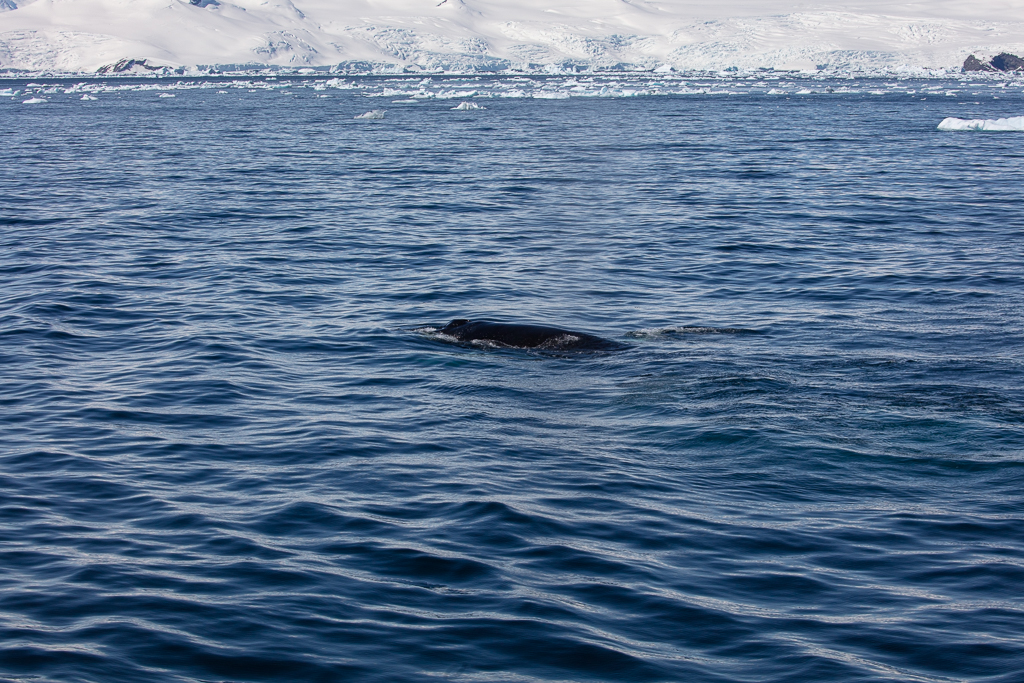
As the day and evening went on, we saw even more whales, some far away, others so close to the ship it felt like you could have just reached out to touch them if you were at water level. Since most of the whale shots are just the backs of them coming out of the water a little, and not really all that exciting, I'll share more Penguin photos instead. I mean, you can't really ever get enough cute penguin photos right? :)
And yes, I know this isn't a penguin, but this seal looked right in the camera so I just know he was hoping for a showing on the internet as well. :)
Today's Weather Conditions
Wind (direction & force): South East | Gentle breeze (7-10Knots)
Weather & Sea: Partly Clouded | Smooth
Temperature: 5ºC | 41 ºF
This morning's first landing was our official first Continental landing, in Neko Harbor. Neko Harbor is an inlet of the Antarctic Peninsula on Andvord Bay, situated on the west coast of Graham Land. Was discovered by Belgian explorer Adrien de Gerlache during the early 20th century. It was named for a Scottish whaling boat, the Neko, which operated in the area between 1911 and 1924.
Above the bay there is a is very active, deeply cracked and tilted glacier that frequently fills the bay with ice and produces huge waves that can wash up onto the beach. There is also a Gentoo rookery on the steep slope above the landing site that may total 1000 pair at the peak of the season
Up until now all of our landings have been on islands just off the Antarctica Peninsula so we've been in Antarctica, but today we officially stepped onto the Continent itself and and I stepped onto my 5th continent. All I have left is Africa and Australia.
There were a lot of Penguins around and I took a lot of photos yet again. The biggest things that happened on this stop that are memorable, is I saw my first pair of mating Penguins.
I saw and photographed a gull stealing a penguin egg to feast on.
And there was a small avalanche across the bay from where we were all standing that put on a very cool show. I captured most of it in photos, and then was given an actual video clip that captured the whole thing as well. Here are just a few of the images I shot of that.
All in all, it was a very fun and memorable stop and fun way to start the day. After a couple of hours here though, it was time to get back on the ship.
The rest of the day was going to be spent watching the landscape, icebergs, and glaciers pass by as we speed up the Gerlache Strait and through the Errera Channel so we can round the top of the peninsula and make a landing on Brown Bluff tomorrow. We are going to be visiting a colony of Adelie penguins that has over 100,000 mating pairs, and is a location that many people usually don't get to see as it's usually blocked in by ice.
The views today were amazing, and the ride east was punctuated with some great whale sightings during the day, including my first real chance to watch a humpback whale breaching over and over again out in the bay. I was actually lucky enough to get one really good shot of it as it breached as well, which was one of those photos I'd always hoped I'd get a chance to take!
As the day and evening went on, we saw even more whales, some far away, others so close to the ship it felt like you could have just reached out to touch them if you were at water level. Since most of the whale shots are just the backs of them coming out of the water a little, and not really all that exciting, I'll share more Penguin photos instead. I mean, you can't really ever get enough cute penguin photos right? :)
And just to finish off the days's photos... here is a photo of one of the many "Penguin Highways" in use:
And yes, I know this isn't a penguin, but this seal looked right in the camera so I just know he was hoping for a showing on the internet as well. :)
Today's Weather Conditions
Wind (direction & force): South East | Gentle breeze (7-10Knots)
Weather & Sea: Partly Clouded | Smooth
Temperature: 5ºC | 41 ºF
Monday, December 23, 2019
Antarctica - Day 10
SATURDAY, DECEMBER 7TH
Today was a very interesting day. Our first stops of the morning were at Port Lockroy and Jougla Point.
The entrance into the harbor was just stunning and might have some of the most beautiful scenery seen so far. Little did I know what I would be seeing later this afternoon. Here were the views on the way into Port Lockroy.
This was looking out the back of the ship as we cruised into the harbor.
Before heading to Port Lockroy though, I went with the first group of people to Jougla Point.
Jougla Point lies at the southwestern end of Wiencke Island and juts into the small
harbor of Port Lockroy, a protected anchorage entered between Flag Point and Lécuyer
Point. This point is a rocky peninsula indented with small coves, a point forming the west side of
the entrance to Alice Creek in Port Lockroy, in the Palmer Archipelago. Snow cornices, glaciers and
extensive, steep, and highly crevassed snowfields surround the Harbour. It was discovered and named by the French Antarctic Expedition, 1903- 1905, under Jean-Baptiste Charcot, who considered it to
be a peninsula.
I won't bore you with more Penguin photos but yes, there were more penguins here but not as many as we have seen at some of our other landing spots. The weather was great and it was just nice to get out and walk around taking it all in while waiting for our turn to head over to the base.
Port Lockroy at Goudier island was a previous British Base, known as “Base A”, and now designated as Historic Site and Monument #61 under the Antarctic Treaty System. It is operated by the United
Kingdom as a living museum. In addition to Bransfield House (the main base building), there is a
boat shed, building foundations and a number of associated artifacts on Goudier Island. It was
built by the ending of the WWII, to prevent from further nazi settlements.
It also houses the only operational post office in Antarctica as well as a small souvenir shop. I think everyone on the ship was looking forward to the chance to mail off postcards from here, that would actually come with a stamp that was canceled in Antarctica. I know I just had to mail a postcard to myself to have something to remember the visit and to keep as a memento. I also was happy to find out I could keep up my tradition of buying a hoodie from everywhere I've traveled as they actually had a hoodie for sale here.
You can see the base here in this photo. That really is all there is to it. A very small island, with no boat, no running water and no plumbing. Yeah, you read that right and now can imagine how hard life here must be. :)
Okay, so I'm going to share a funny story here.. I bought a postcard for myself and one for my daughter and wrote each of us a short little note to mail from here today. I quickly learned that sleep deprivation really does effect brain function as when I went to address the postcard to myself, I honestly could NOT remember my home address! I sat there totally blank trying to remember it, and to make things even funnier, I forgot I had my wallet in my back pocket which has this little thing inside it called a driver's license. On that license is my address. Did I remember that? Nope! After about 5 minutes the address finally came to me, but I think this was the first sign that I really needed to start getting some sleep on this trip. LOL
I thought the view this morning was one of the most beautiful I'd ever seen and couldn't imagine anywhere else on this trip beating it. Little did I know how wrong I was, and just how short the wait would be to see what might be the most beautiful place on the planet. And yes, I still think so even now that the trip is over.
This afternoon, we made our way to the Lemaire Channel, which is a 11km long and 1600 meters wide strait off Antarctica between Kiev Peninsula in the mainland’s Graham Land and Booth Island. It's been nicknamed “Kodak Gap” by some because of its scenic views and once you see it, you'll totally understand why.
Instead of posting a bunch of photos here to try to give you an idea of just how beautiful this place was, let's try something different, here is a link to a timelapse video on my website that is about 5 minutes long, and kind of let's you get a feel of the experience of sailing a ship through the Lemaire...
https://www.jamesmiller.photography/Videos/i-rtzNJ5D/A
When we get close to the end of the channel, there is a huge iceberg and sheet ice in front of us, blocking the rest of the way through. You can kind of make it out when the ship slows and starts to turn around. I'd say I was disappointed we didn't get to go the rest of the way through, but I'd be lying because having to turn around, meant we got to witness this beautiful place a second time and have even more opportunities to shoot photos that might hopefully capture it's beauty.
Today was a very interesting day. Our first stops of the morning were at Port Lockroy and Jougla Point.
The entrance into the harbor was just stunning and might have some of the most beautiful scenery seen so far. Little did I know what I would be seeing later this afternoon. Here were the views on the way into Port Lockroy.
This was looking out the back of the ship as we cruised into the harbor.
And then this was the view looking forward to see where we were heading.
A Zodiac was sent out to pick up two of the volunteers from Port Lockroy who were going to come and give a talk on the history of the base, and answer any questions people may have about what they do here, what life is like being almost stranded here for months on end, etc.
Before heading to Port Lockroy though, I went with the first group of people to Jougla Point.
Jougla Point lies at the southwestern end of Wiencke Island and juts into the small
harbor of Port Lockroy, a protected anchorage entered between Flag Point and Lécuyer
Point. This point is a rocky peninsula indented with small coves, a point forming the west side of
the entrance to Alice Creek in Port Lockroy, in the Palmer Archipelago. Snow cornices, glaciers and
extensive, steep, and highly crevassed snowfields surround the Harbour. It was discovered and named by the French Antarctic Expedition, 1903- 1905, under Jean-Baptiste Charcot, who considered it to
be a peninsula.
I won't bore you with more Penguin photos but yes, there were more penguins here but not as many as we have seen at some of our other landing spots. The weather was great and it was just nice to get out and walk around taking it all in while waiting for our turn to head over to the base.
Port Lockroy at Goudier island was a previous British Base, known as “Base A”, and now designated as Historic Site and Monument #61 under the Antarctic Treaty System. It is operated by the United
Kingdom as a living museum. In addition to Bransfield House (the main base building), there is a
boat shed, building foundations and a number of associated artifacts on Goudier Island. It was
built by the ending of the WWII, to prevent from further nazi settlements.
It also houses the only operational post office in Antarctica as well as a small souvenir shop. I think everyone on the ship was looking forward to the chance to mail off postcards from here, that would actually come with a stamp that was canceled in Antarctica. I know I just had to mail a postcard to myself to have something to remember the visit and to keep as a memento. I also was happy to find out I could keep up my tradition of buying a hoodie from everywhere I've traveled as they actually had a hoodie for sale here.
You can see the base here in this photo. That really is all there is to it. A very small island, with no boat, no running water and no plumbing. Yeah, you read that right and now can imagine how hard life here must be. :)
Okay, so I'm going to share a funny story here.. I bought a postcard for myself and one for my daughter and wrote each of us a short little note to mail from here today. I quickly learned that sleep deprivation really does effect brain function as when I went to address the postcard to myself, I honestly could NOT remember my home address! I sat there totally blank trying to remember it, and to make things even funnier, I forgot I had my wallet in my back pocket which has this little thing inside it called a driver's license. On that license is my address. Did I remember that? Nope! After about 5 minutes the address finally came to me, but I think this was the first sign that I really needed to start getting some sleep on this trip. LOL
I thought the view this morning was one of the most beautiful I'd ever seen and couldn't imagine anywhere else on this trip beating it. Little did I know how wrong I was, and just how short the wait would be to see what might be the most beautiful place on the planet. And yes, I still think so even now that the trip is over.
This afternoon, we made our way to the Lemaire Channel, which is a 11km long and 1600 meters wide strait off Antarctica between Kiev Peninsula in the mainland’s Graham Land and Booth Island. It's been nicknamed “Kodak Gap” by some because of its scenic views and once you see it, you'll totally understand why.
Instead of posting a bunch of photos here to try to give you an idea of just how beautiful this place was, let's try something different, here is a link to a timelapse video on my website that is about 5 minutes long, and kind of let's you get a feel of the experience of sailing a ship through the Lemaire...
https://www.jamesmiller.photography/Videos/i-rtzNJ5D/A
When we get close to the end of the channel, there is a huge iceberg and sheet ice in front of us, blocking the rest of the way through. You can kind of make it out when the ship slows and starts to turn around. I'd say I was disappointed we didn't get to go the rest of the way through, but I'd be lying because having to turn around, meant we got to witness this beautiful place a second time and have even more opportunities to shoot photos that might hopefully capture it's beauty.
Today's Weather Conditions
Weather & Sea: Partly Clouded | Calm
Temperature: 3ºC | 37.4 ºF
LAT. 65° 11’ S, LONG. 64° 10’ W
Weather & Sea: Partly Clouded | Calm
Temperature: 3ºC | 37.4 ºF
LAT. 65° 11’ S, LONG. 64° 10’ W
Sunday, December 22, 2019
Antarctica - Day 9 - Part 2
December 6, 2019
After lunch, it was time to kick back a bit in the lounge and share stories with people about the trip so far. A number of people were working on photos but I was just spending most of my time making 2 full backups of all the shots I'd taken so far. I wasn't sure if I'd ever get down here again, so wanting to be extra careful and get two copies of everything JUST in case one of my hard drive backups went bad.
While waiting for my group's turn to get out on the Zodiacs and cruise around Cierva Cove, there was some big excitement, as a group of whales came up really close to the ship and were actively feeding. Until now most whales we'd seen were hundreds of yards away but this group was probably less than 50-75 feet from us. Everyone grabbed their cameras and rushed to the deck in hopes to get some great shots.
There was a moment when we all thought we were going to see something extraordinary, when we could see the whales begin to build a bubble net! I don't know how well you can see it in this photo, but the whales began to circle and blow bubbles which helps them gather their prey into a nice tight group so that they can then swoop up and get more in each mouthful. If you've ever seen video or photos of a group of whales with their mouths wide open punching through the surface of the water, that's what I thought were were going to see here!
Cierva Cove lies at the western side of the Antarctic Peninsula in the northern
entrance of the Gerlache Strait. In the vicinity, there is an Argentinean station (Primavera
Station). It is truly another beautiful area surrounded by spectacular glaciers and as we headed across the water you could really see just how big those glaciers were!
The first shot most everyone wanted to take of course, was another photo of the ship from on the water just below it After that, we were off and running across the bay.
Once again we stayed up really late, taking lots of photos, and then when the light stopped changing and we felt satisfied with our photos, it was time to head off to bed to try to get at least a few hours of sleep.
After lunch, it was time to kick back a bit in the lounge and share stories with people about the trip so far. A number of people were working on photos but I was just spending most of my time making 2 full backups of all the shots I'd taken so far. I wasn't sure if I'd ever get down here again, so wanting to be extra careful and get two copies of everything JUST in case one of my hard drive backups went bad.
While waiting for my group's turn to get out on the Zodiacs and cruise around Cierva Cove, there was some big excitement, as a group of whales came up really close to the ship and were actively feeding. Until now most whales we'd seen were hundreds of yards away but this group was probably less than 50-75 feet from us. Everyone grabbed their cameras and rushed to the deck in hopes to get some great shots.
There was a moment when we all thought we were going to see something extraordinary, when we could see the whales begin to build a bubble net! I don't know how well you can see it in this photo, but the whales began to circle and blow bubbles which helps them gather their prey into a nice tight group so that they can then swoop up and get more in each mouthful. If you've ever seen video or photos of a group of whales with their mouths wide open punching through the surface of the water, that's what I thought were were going to see here!
Everyone had their camera's ready and you could hear the excited voices thinking we were about to get a GREAT show, but sadly this group of whales was just going to tease us, and they ended up feeding just below the surface instead. So we didn't get those amazing shots, but still got a really fun show as the whales just slowly moved back and forth next to the ship, slowly feeding and from time to time showing their dorsal fins, and every once in a while, giving as a quick view of their tails as the would go into a deeper dive for a few minutes. Here are just a few photos of the whales in action:
They stayed right next to us for close to 20 minutes before finally moving on and out of site of the ship. Even though we didn't get the epic type of show, it was still so very cool to watch them up so close to us.
At 16:00, it was finally time for the second half of us to climb aboard the Zodiacs and head out into the cove. There was a lot more ice here although much of it was smaller than what we saw yesterday. The Pro that was in our boat had scoped out a very cool area with the first group, and asked our driver to hurry and take us there first to start the ride. The thinking was it was much further out than most of the other Zodiacs would go so we'd have it all to ourselves, and if we started off as far away as we dared go, we could take our time out there, and then slowly work our way back to the ship.
Cierva Cove lies at the western side of the Antarctic Peninsula in the northern
entrance of the Gerlache Strait. In the vicinity, there is an Argentinean station (Primavera
Station). It is truly another beautiful area surrounded by spectacular glaciers and as we headed across the water you could really see just how big those glaciers were!
The first shot most everyone wanted to take of course, was another photo of the ship from on the water just below it After that, we were off and running across the bay.
Here are just some of the views we had once we got to the far end of the bay. It's really hard to judge how tall these glacier walls were, but if I had to guess, I'd say they were about as high as a 6 story building.
Once we all shot tons of photos in and around those big glaciers, we began to slowly head back toward the ship and pass a number of very interesting looking icebergs. One cool thing I started to spot on some of them, were these long icicles hanging down from the edges, where you could see that the snow on top had begun to melt during the warm days and as the water ran down and dripped into the sea, it would freeze again at night as the temps dropped. It was pretty interesting to me...
Here is a quick look at a few of the rock formations poking out of all that ice and snow.
The icebergs here are so seriously blue when the light hits them just right. Here you can really see that blue and how it almost seems to glow from deep inside.
Just for fun I'm including a couple of shots with another Zodiac in the photo for scale. We were cruising around this one berg with a cool arch in it when suddenly another Zodiac pulled in front of the arch on the other side. We were soon all shooting photos of each other through the arch. LOL
In this shot, you can see just how full the bay was with all kinds of small chunks of ice. I'm guessing most of these were from all kinds of small chunks breaking off of the big glaciers from earlier and then those chunks slowly melting and breaking down over time.
Once back on the ship, it was time to get out of the extra layers and waterproof stuff and into street clothes. Before dinner was served, there was a quick lightroom class on the Develop module. It's always interesting to me to see and hear how others use Lightroom to edit their photos.
There was also a quick briefing by the expedition leader about tomorrows activities and then it was off to dinner. The first few days on the ship, a group of 6 of us had found a nice small and quiet back room to sit and have our meals in. Turns out the secret was out and when we got in the dining room, our table had been overtaken by another group. We moved to another table in the room even though it wasn't set up for meals, and the crew was more than happy to bring us what we needed to sit there since they knew we'd used that room every meal until now.
After dinner there was one more talk given. This one was on the mammals of Antarctica and then after that it was everyone to themselves. Once again, the large majority of people headed off to bed, and the usual suspects kept looking out the window, knowing we could possibly had yet another beautiful sunset ahead of us. I mean, who can sleep when the weather looks like this?
Subscribe to:
Posts (Atom)